
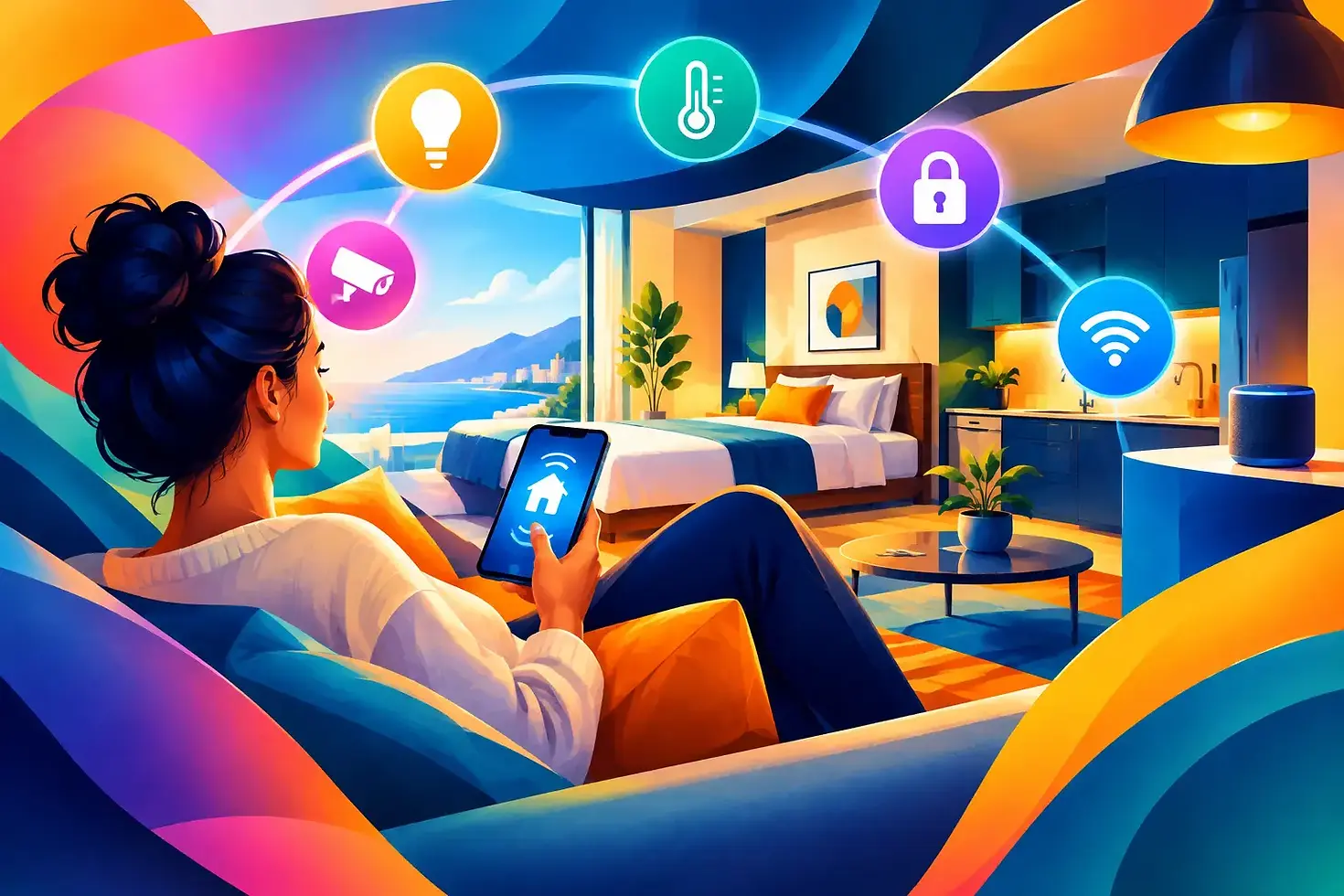
Smart Home Trends for Rentals That Guests Value

A guest should not have to hunt for a key after a long drive into the North Georgia mountains, call for help because the heat will not adjust, or discover a small leak after it has become a major inconvenience. The best smart home trends for rentals solve these real moments quietly. They make a stay feel considered while giving owners greater visibility over the property they have worked hard to build.
For rental owners, smart technology is no longer just a novelty or a line item on a listing. Used thoughtfully, it can support smoother turnovers, reduce avoidable damage, lower utility waste, and create the kind of dependable experience that leads to stronger reviews. The goal is not to fill a home with gadgets. It is to select practical tools that protect the asset and make hospitality feel effortless.
Why smart technology matters in a rental
A primary residence can tolerate a little friction. Its owner knows which key sticks, how the thermostat works, and where the shutoff valve is located. A rental welcomes new people who do not have that familiarity, often arriving outside standard business hours and with high expectations for comfort.
Smart systems help close that gap. A guest receives a unique door code instead of coordinating a key exchange. A manager can confirm that a thermostat is set appropriately between stays. A leak sensor can send an alert before water reaches flooring, cabinetry, or the unit below. These are not flashy upgrades. They are practical safeguards that protect both the guest experience and the owner's bottom line.
That said, technology should support attentive service, not replace it. A lock battery can die. Wi-Fi can go down. A guest may still need a real person who can answer the phone and solve a problem. The strongest rental operations pair smart tools with responsive oversight, clear instructions, and reliable backup plans.
Smart home trends for rentals worth watching
Not every emerging device belongs in every property. The right investments depend on whether a home serves weekend vacationers, seasonal guests, or long-term residents, as well as the property's layout, utility costs, and local rules. These trends have staying power because they address recurring operational needs.
Keyless entry with individual access codes
Smart locks remain one of the highest-value upgrades for both short-term and residential rentals. Rather than copying keys or worrying about a key left behind after checkout, managers can create access codes with defined start and end times. Housekeepers, maintenance professionals, and guests can each receive the access they need without compromising control of the home.
For vacation rentals, an arrival-day code removes one of the most common points of travel stress. For long-term rentals, keyless entry can simplify move-ins and service visits. Choose commercial-grade hardware that works with the door, has a physical key override, and can operate reliably during an internet interruption. A sophisticated lock is only helpful if it remains easy to use at the front door.
Smart thermostats that protect comfort and costs
Heating and cooling can be one of the largest operating expenses in a rental, particularly when a home sits vacant between reservations or when guests leave doors open during a warm afternoon. Smart thermostats allow appropriate temperature settings before arrival, after departure, and during vacant periods.
The guest should always retain reasonable control during a stay. Overly restrictive temperature limits can feel less like hospitality and more like cost-cutting. Instead, set sensible guardrails that protect the HVAC system without making guests uncomfortable. In a mountain property, humidity monitoring and freeze protection may be as valuable as energy savings.
Water-leak detection and automatic shutoff options
Water damage rarely announces itself at a convenient time. A small leak under a sink, behind a toilet, near a water heater, or by a washing machine can create costly repairs when a property is vacant. Smart leak sensors provide early warnings, allowing a manager or maintenance partner to respond quickly.
For higher-risk properties or homes that remain empty for extended periods, an automatic water shutoff system may deserve consideration. It is a larger investment, and installation requirements vary, but the potential to prevent a serious loss can be significant. At a minimum, sensors near common leak points are a practical layer of protection.
Privacy-conscious noise monitoring
Noise monitoring is becoming more common in vacation rentals, especially in communities with occupancy, quiet-hour, or event restrictions. The most appropriate systems measure sound levels without recording conversations. Their purpose is to identify sustained volume that may disturb neighbors, not to monitor a guest's private time in the home.
Transparency is essential. Guests should know before booking and in the house rules that a non-recording noise monitor is present, where it is located, and what it does. No monitoring device should ever be placed in private indoor spaces. The right approach protects neighborhood relationships while respecting the trust guests place in the property.
Connected smoke, carbon monoxide, and environmental alerts
Traditional smoke and carbon monoxide alarms remain essential, but connected models can add another layer of awareness by notifying the management team of an alert when the home is unoccupied. Depending on the property, sensors for temperature, humidity, or freezing conditions can also identify problems before they affect guest comfort or cause damage.
These devices do not eliminate the need for routine inspections, battery checks, and compliance with applicable safety requirements. They make those responsibilities easier to manage across a portfolio and can help direct attention where it is needed most.
Make automation feel like hospitality
The most successful smart homes do not feel technical to the guest. They feel prepared. Entry instructions are concise. The thermostat is easy to find. Wi-Fi information is visible. If a device requires an app, it should be optional rather than a condition of using the home.
A well-designed arrival sequence might include a door code sent at the appropriate time, lights scheduled for an evening check-in, and a comfortable temperature inside. These details can create an immediate sense of welcome, particularly after a long day of travel. They also reduce simple support requests, allowing the team to focus on situations that truly require personal attention.
Keep the control experience simple. A printed quick-start card near the relevant device is often more useful than a lengthy digital manual. Guests should be able to turn on a light, adjust the temperature, and lock the door without learning a new ecosystem.
Where owners should be cautious
More technology does not automatically produce a better rental. A collection of devices from unrelated platforms can create password issues, unreliable automations, and confusion for guests and managers. Whenever possible, select compatible equipment and maintain a secure, documented system for account access, warranties, and replacement schedules.
Privacy deserves equal attention. Exterior security cameras may be appropriate at entrances, driveways, or other permitted exterior areas, but they must be clearly disclosed and positioned responsibly. Cameras and recording devices have no place inside a rental, and equipment should never be aimed toward private outdoor areas where guests reasonably expect privacy.
There is also a cost question. A smart refrigerator or voice-controlled appliance may sound appealing, but it may not solve a meaningful guest or operational problem. Prioritize the technologies that reduce risk, support comfort, or save measurable time. An owner will usually see more value from a dependable smart lock and leak sensor than from a complicated device that adds another maintenance burden.
A practical rollout for owners
Start with the friction points already visible in the property. If check-ins regularly require coordination, begin with keyless entry. If utility bills spike between stays, assess climate controls. If the home has older plumbing, multiple bathrooms, or long vacancy periods, leak detection may be the priority.
Next, consider who will operate the system every day. A property manager needs permission levels that allow the team to assist guests, coordinate vendors, and respond to alerts without sharing an owner's personal account. Document every device, code procedure, battery type, and manual override. That preparation matters when a guest arrives late or a vendor needs access quickly.
Finally, test the experience from the guest's perspective. Stand outside with only the instructions they receive. Connect to the Wi-Fi. Adjust the thermostat. Ask whether the system feels intuitive and welcoming. If it does not, simplify it before the next arrival.
At Wander Yonder Management, thoughtful technology is part of a larger service standard: comfort for guests, peace of mind for owners, and careful attention to the details that protect a home. The right smart upgrades should never overshadow the stay. They should simply help every guest arrive to a property that feels ready, cared for, and worth returning to.


Comments